
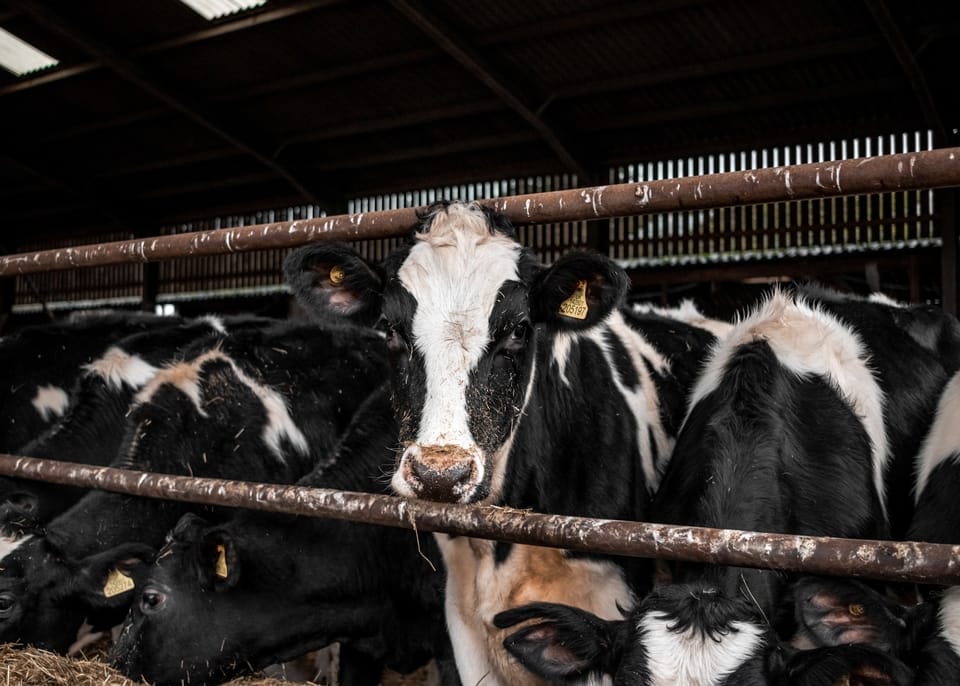
Dairy enterprise accounting is relevant regardless of the size of your dairy operation. Whether you’re managing a small herd or a large-scale dairy, understanding how each part of your operation contributes to profitability is critical for long-term success. Implementing dairy enterprise (managerial) accounting into your farm accounting system is generally dependent on two primary considerations:
- Is your dairy operation one of the major revenue sources (i.e. >25% of total farm revenue) for your farm?
- Does your current accounting system allow you to implement managerial reporting?
There are various accounting software programs available that meet the minimum requirements of financial reporting for compliance, such as income and payroll tax reporting. However, compliance-focused reporting doesn’t always provide the operational insights dairy producers need. If you’re working to strengthen the foundation of your farm financial system, our article on Farm Accounting and Financial Management Simplified provides a helpful overview of how agricultural accounting and farm financial management tools support better decision-making.
When implemented correctly, managerial accounting provides valuable financial metrics such as cost of production, profitability per head milked, and profit per CWT of milk. These metrics are essential for evaluating performance to improve profitability and to evaluate capital decisions to maintain your operation’s facilities or plan future expansion.
Customize Your Dairy Enterprise Reporting
Dairy operations, regardless of size, often use similar production and managerial accounting principles. Where they differ is in how reporting is customized across various enterprises or production segments. Segmenting your dairy into distinct profit and cost centers helps clarify which areas are driving performance—and which may be limiting profitability.
Key Dairy Enterprise Accounting Centers
Below are common enterprise and cost centers used in dairy enterprise accounting. Not every operation will use all of these, but the structure can be adapted based on management goals and complexity.
Milk Profit Center
The milk profit center records all revenues directly related to milk production, including:
- Milk sales
- Cull cow sales
- Calf sales
- Government program payments
- Hedge gains or losses
- Other risk management revenues
Tracking these revenue streams together provides a clear picture of the dairy’s top-line performance. If your dairy is utilizing a Dairy Beef program to grow and/or finish feeders for the market, you may want to establish a separate Dairy-Beef Profit Center to segment those revenues and expenses.
Dairy Herd Center
This center records all direct production expenses related to the herd, including feed costs for both lactating cows and dry cows. If desired, these can be separated into distinct categories to allow for more precise analysis.
Parlor Center
The parlor center captures labor and other direct production expenses associated with the milking parlor. This allows producers to better evaluate labor efficiency and parlor-related operating costs.
Replacement Center
This center records all direct production expenses associated with developing replacement heifers—whether those replacements are raised on-farm or contracted to a custom heifer operation.
Understanding replacement costs is critical for long-term herd sustainability and capital planning.
Using Dairy Accounting Information Effectively
Depending on your farm’s available resources, you may choose to utilize additional support operation centers, such as raised feeds, equipment, labor, or facilities. If your farm also raises crops that are used in dairy feed rations, you have the option of “charging” the dairy operation for each crop’s cost of production (as determined by managerial reporting) or at a fair market value (opportunity cost).
Whether raised or purchased, feed is one of the largest cost factors in producing milk. Along with feed, there are many additional expenses (i.e.):
-
Animal Health
- Breeding
-
Custom
-
Fuel
-
Insurance
-
Repairs
-
Supplies
-
Utilities
Cash expenses when tracked through good managerial reporting can be recorded, analyzed, and improved with the goal of increasing efficiency and profitability.
Depending on the farm’s capital structure, there are often capital costs associated with land, equipment, breeding stock, and buildings. Except for land, depreciation is a capital cost on the depreciable assets that should be included in managerial accounting to allow producers to correctly assess cost of production and evaluate whether current profits are sufficient to fund future asset replacement.
Accounting for the Future: Budgeting and Capital Planning
Accounting records what has already happened—but dairy enterprise accounting should also be used to plan ahead. These same managerial accounting principles should be applied when preparing budgeted cash flow projections for the coming year or production cycles.
By incorporating a managerial operating budget and capital budget, dairy producers can more accurately and confidently make decisions regarding equipment replacement, facility improvements, herd expansion, or other long-term investments.
If you’re looking for a helpful starting point to structure your projections and planning process, our guide on Farm Budgeting 101: Getting Started outlines foundational steps that support more accurate budgeting and decision-making.
How UnCommon Farms Can Help
Implementing dairy enterprise accounting doesn’t need to be overwhelming—but starting with the right structure is critical. If you need help implementing managerial (enterprise) reporting into your dairy operation accounting system, working with an experienced advisor can help ensure you’re capturing the right data from the start.
UnCommon Farms works alongside dairy producers to build practical accounting systems, enterprise reporting structures, and budgeting tools that support informed, data-driven decisions. Whether you’re focused on improving cost of production, planning capital investments, or strengthening long-term profitability, our team can help you turn your financial data into actionable insight.
Subscribe to our blog for more farm financial management resources or contact UnCommon Farms to learn how our accounting and financial consulting services can support the future of your dairy operation.